
Import & Logistics · 2026-09-28
How to Import Furniture from China: A Guide
From Incoterms and landed cost to documents and container loading — a practical first-container guide for furniture importers.
OEM buys your design; ODM adapts the factory's. Compare cost, speed, control and risk — and see which model fits your brand's stage.
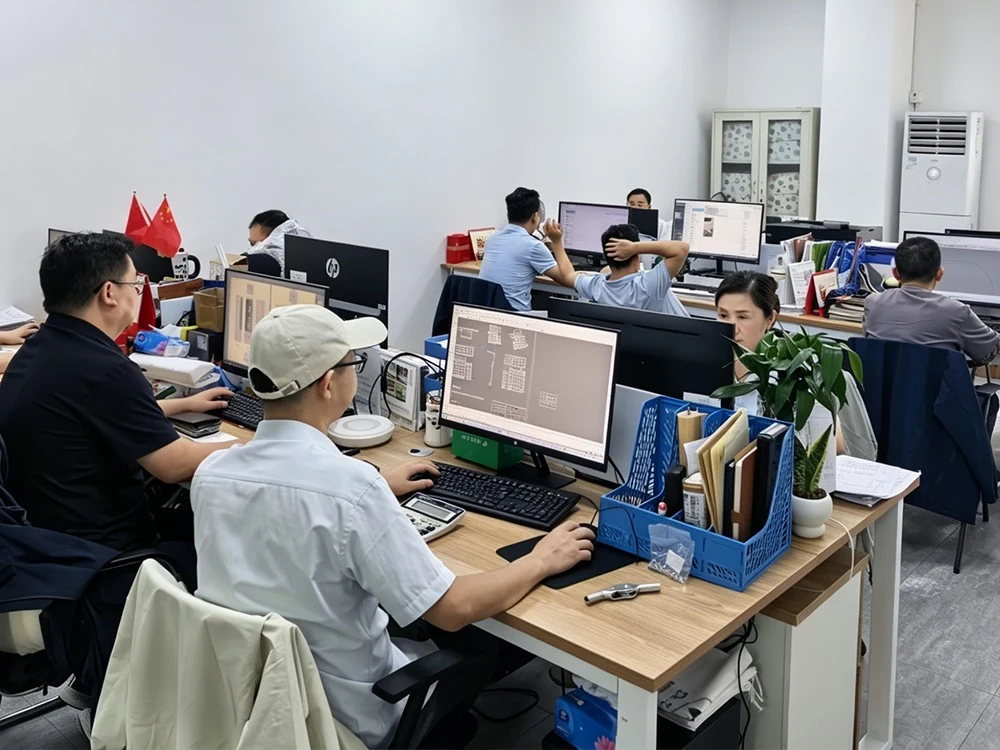
When buyers ask about OEM vs ODM furniture, they are usually asking a price question. The real question is who owns the design — and therefore who carries the development cost, the risk and the differentiation. Both models are legitimate ways to build a private-label program with a Chinese factory, and the right choice depends far less on unit price than on what you already own: a drawing, a mould, or neither. This guide breaks down how each model actually works in upholstered furniture, what each one costs in time and money, and how to tell which one fits the stage your brand is at.
What OEM means in furniture. In an OEM program, you bring the design and the factory builds to it. You supply drawings, dimensions, foam density, fabric and stitching specifications, and often the tooling; the factory is responsible for manufacturing exactly what you specified and for meeting the quality standard you have written down. That division is what makes OEM attractive: you own the intellectual property, the silhouette is yours alone, and nobody else can list the same product. It is also why OEM carries more upfront work — sampling, specification and sometimes tooling cost — and why the quality of your own spec sheet decides the quality of the outcome. That sheet is also your commercial protection: when foam density, fabric composition, stitching and packaging are written down, a disagreement about delivered goods becomes a measurable question rather than an opinion. Buyers who invest an extra week in specification usually save far more than that week costs, because sampling rounds and rework are cheaper before tooling and bulk materials are committed.
What ODM means — and why it moves faster. ODM flips the starting point: the factory already owns a developed platform, and you adapt it. You choose from existing constructions and change what the market sees — fabric, colour, foam firmness, dimensions, packaging format, labels and branding — instead of funding development from zero. The advantages are speed and lower upfront cost: a first order can be quoted and sampled quickly, which matters most when you are testing a category. The trade-off is obvious too: a platform other buyers can also license is not a moat, so exclusivity usually has to be earned through custom colours, custom tooling or volume commitments.
Which model fits your stage. A new e-commerce brand with no tooling and no drawings should usually start with ODM: pick a proven platform, apply your brand, test the market with a small batch, and learn what your customers actually reorder. An established brand with a clear product thesis — a patented mechanism, a signature silhouette, a proprietary comfort story — should move to OEM, because the product itself is the moat and paying for development is the point. Distributors and wholesalers sit between the two: they typically run ODM platforms across most of the range and use OEM for one or two hero models that differentiate their catalogue from the shop next door. A useful rule of thumb is to fund development only for the products you intend to defend. Everything else can ride on a platform the factory has already proven, which leaves your capital for marketing, inventory and the parts of the business the customer actually notices. As a brand grows the mix usually shifts — ODM carries the volume, OEM carries the identity — so the factory you choose should be comfortable running both at the same time.
Where brands get it wrong. Three mistakes show up again and again. The first is treating ODM as a cheaper version of OEM and expecting the same exclusivity. The second is approving a sample without a written material specification, then discovering that production foam, fabric or stitching is not what was promised. The third is forgetting that packaging and labelling are part of the specification — a product that ships compressed needs a packing format and carton designed from the start, not added at the loading dock.
The model you can use is decided by what you own — your drawing, your mould, or neither.
What to prepare before you ask for a quote. A useful brief answers nine questions: target market and retail price point; the warranty you intend to offer; dimensions and configurations you need; seat foam density and firmness; fabric, colour and any performance requirements; whether the product must ship compressed; packaging and carton format; your labelling and branding plan; and the compliance documents your market requires. Send that list and a factory can respond properly — at DIAS a preliminary solution comes back within 24 hours, with a quotation and a logistics proposal within 3 hours of the details being clear. Send only a photo, and every quote you receive will be a guess. Two entries on that list deserve extra attention. Compression: if the product has to ship vacuum-packed — which can cut packed volume by 60–80% and restore to full shape within 48–72 hours — then foam grade, cover construction and carton dimensions must be specified before sampling, not after. Packaging: the carton is part of the product specification, and asking for it at the loading dock is how buyers discover their container holds fewer units than they planned.
How one factory runs both. Both models depend on the same underlying capability. DIAS operates two production bases in Shenzhen and Hunan, 20,000 m² of workshops producing 5,000 sets a month, with 20 senior prototyping technicians turning drawings into physical samples. Material compliance runs through ISO 9001, CertiPUR-US foam, OEKO-TEX Standard 100 fabrics, RoHS and YKK zippers, and every order passes a 4+3 inspection sequence plus 100% pre-shipment inspection, with a first-pass yield above 98% and a one-year warranty. Whether you arrive with a drawing or with a market to test, the same teams handle sampling, tooling, production and export packing — and custom labels, from woven tags to silicone badges, are free on both paths.
A practical way to decide. If you cannot yet describe your customer in one sentence, start with ODM and treat the first order as paid market research. If you can describe exactly what you want and why nobody else has it, go OEM. If you are already selling, run both deliberately: ODM for the fast-moving range that keeps cash turning, OEM for the one product that makes your brand worth remembering. The worst outcome is not choosing the wrong model — it is choosing one by accident and discovering the cost two containers later.
See our OEM & ODM process, browse compression sofas and compression beds, or read how MOQ works on a first order. Sampling, terms and lead-time questions are answered in our FAQ — and our certifications and compliance page lists exactly what can be documented for your market. When you are ready, request a quote.
Written by the DIAS export team.
From Incoterms and landed cost to documents and container loading — a practical first-container guide for furniture importers.
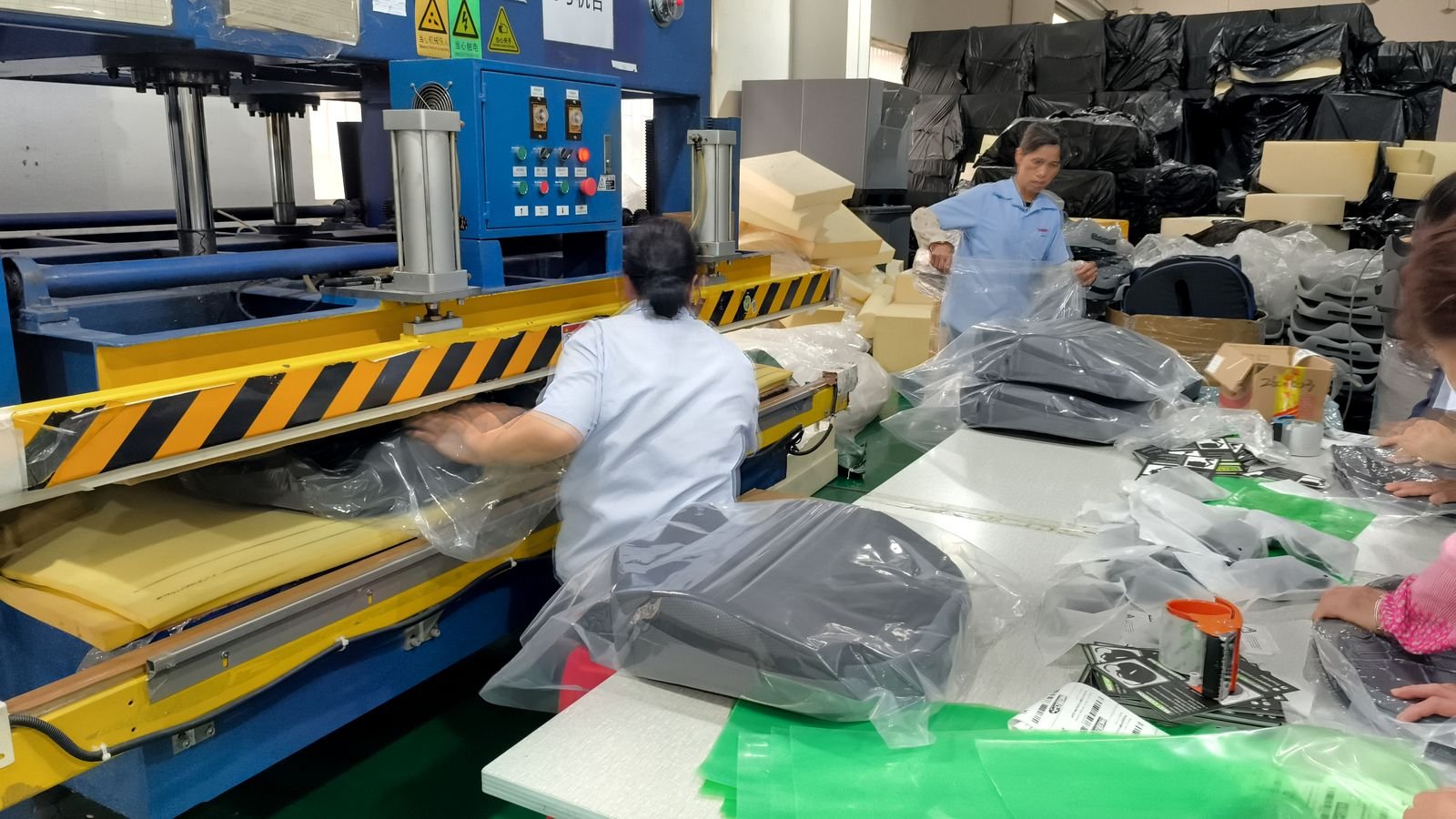
Vacuum compression cuts sofa volume by 60–80%, lowering freight, storage and damage costs. How it works and what to check before you book the container.
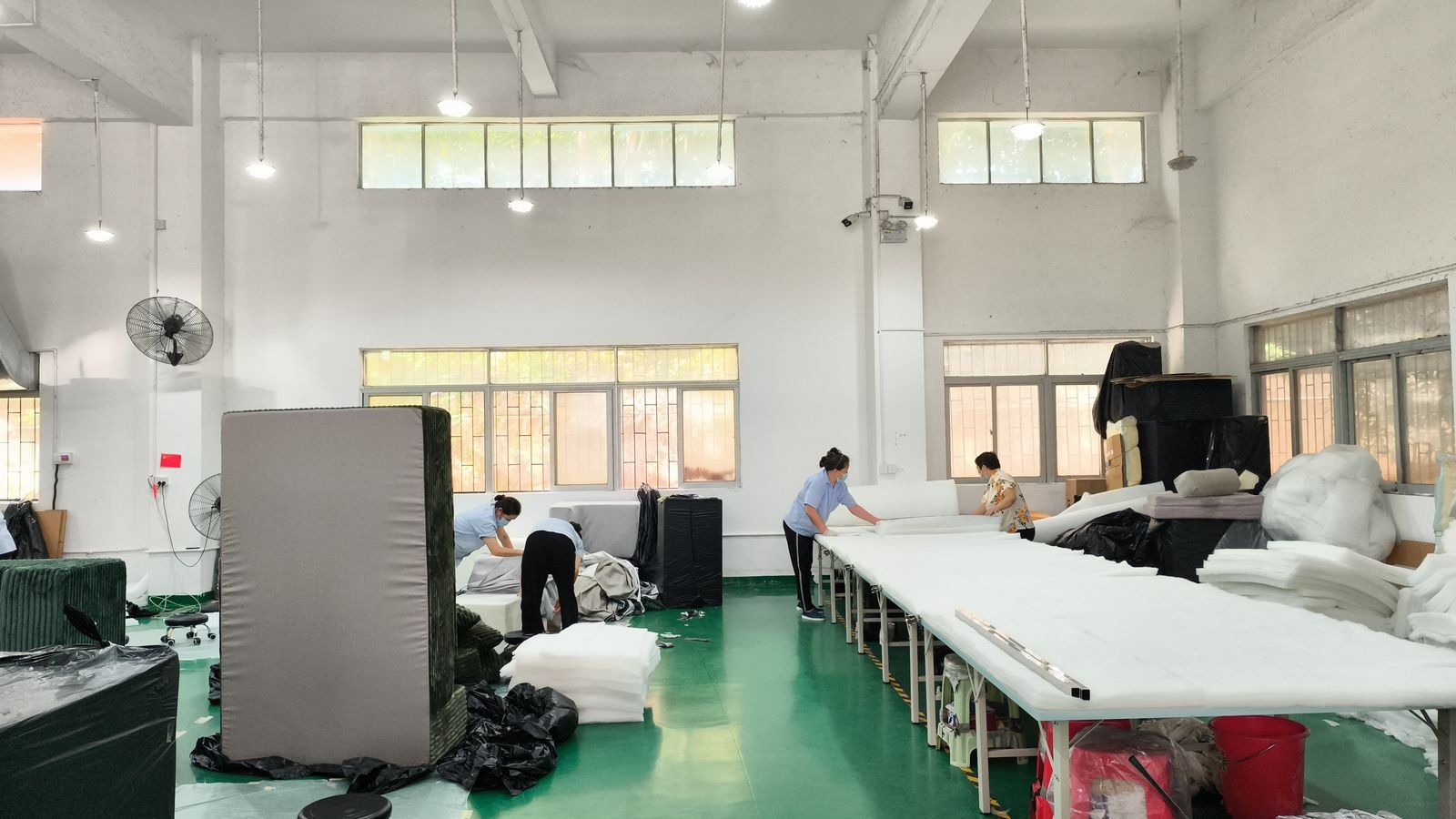
Foam density decides sofa durability, comfort and recovery after compression shipping. What importers should specify — and what to demand from a factory.
Samples in around 10–12 working days. Bulk production typically 30–40 working days. Ask us for your numbers.